

As a player prepping for the War Within raid in WoW, it’s essential to understand class changes, adjust to new raid mechanics, and engage in strategic positioning. Gear optimization, diligent practice, and clear communication play key roles in your success. Leverage your character’s unique abilities, adapt to gear alterations, and stay updated with weekly updates and class balance changes. Mastering these aspects culminates in effective encounters—dive deeper to access the potential for increased raid achievements.
Key Takeaways
- Understand class changes and utilize utility abilities, defensive cooldowns, and crowd control in the new raid mechanics in Nerub’ar Palace.
- Strategically position your character based on class abilities and boss mechanics for effective encounter adaptation.
- Refine your gear, use consumables, and practise rotations for best performance; manage role responsibilities and communication in raid groups.
- Stay informed about balance changes, buffed or nerfed abilities, and evolving meta through resources such as patch notes and community platforms.
- Adapt gameplay strategies based on weekly updates, hotfixes, or major patches; monitor group composition preferences to better adjust your strategy.
Understanding Class Changes in The War Within
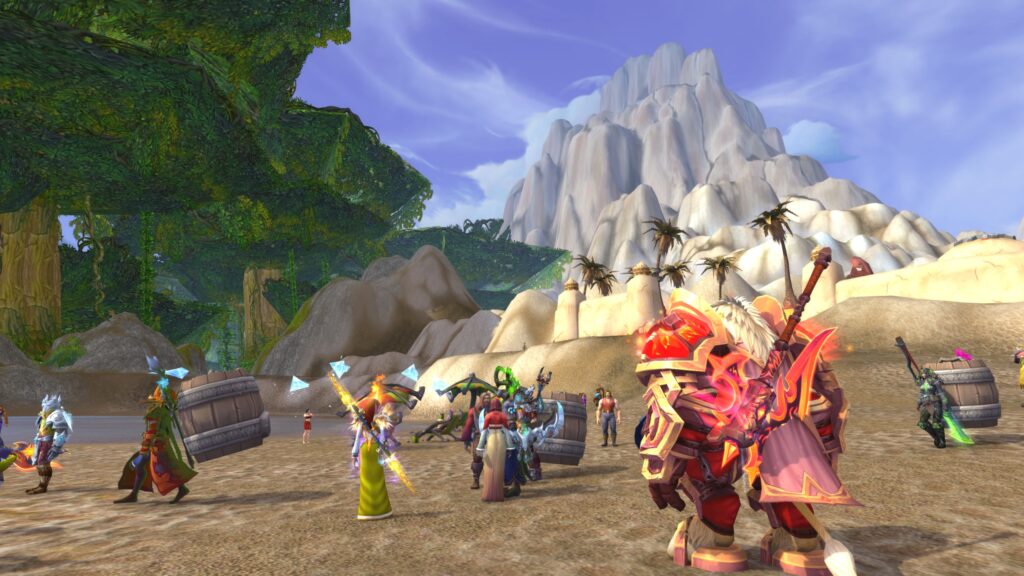
As you venture into the latest World of Warcraft expansion, “The War Within”, it’s crucial to grasp the widespread class changes that have been implemented.
Class performance and specialization balancing are at the forefront of these changes. Your talent choices matter now more than ever, with PvE adjustments like the Frost Death Knight receiving a 6% damage reduction and the Balance Druid getting a damage buff across multiple abilities.
PvP tuning is also in the mix, with Druid Rip and Rake damage up by 15% in PvP combat. Understanding raid dynamics is key, especially considering the new 2-piece and 4-piece bonuses split by role and designed for each specialization.
Keep an eye on ability interactions, damage mitigation strategies, and role synergy to maximize your performance. With the power scaling changes, it’s time to strategize, test new hero talents in the alpha stage, and embrace the Liberation of Undermine raid theme.
Feedback on specific class mechanics have brought up issues like the removal of the Burden of Power’s double dip feature, sparking concerns about the consistency of nether precision mechanics.
Navigating New Raid Mechanics

Delving into the new raid mechanics in Nerub’ar Palace, you’ll encounter a territory-shifting mechanic in the Bloodbound Horror fight that will test your strategic thinking.
To navigate this mechanic, you’ll need to prioritize add management, adapt to environmental hazards, and coordinate your cooldown usage.
- Add management: Cleaving small adds during territory-shift phases is essential. You’ll also need to interrupt caster adds to prevent boss shields.
- Environment awareness: Dodge green waves to avoid acid pools, clear webs, and manage stacking debuffs. Be wary of knockback effects and platform edges.
- Cooldown usage: Make smart use of immunities for web-clearing mechanics and time defensive cooldowns for heavy raid-wide damage.
In addition, tanks must perform timely taunt swaps after specific boss casts to effectively manage damage (taunt swaps). Mechanic adaptations are key to mastering these new challenges. Enhance your environment awareness and strategic thinking to conquer the Bloodbound Horror and beyond.
Strategic Positioning and Encounter Adaptation
When it comes to strategic positioning and encounter adaptation, the paramount rule is to always stay on your toes. Your positioning tactics should tap into the terrain features, maintaining proper distance from bosses and teammates.
Adapt your positioning based on boss mechanics, and use your class abilities to reposition swiftly when necessary. As a melee class, flank and avoid frontal attacks. If you’re ranged, prioritize line of sight and safe distances.
Healers, you need to position for maximum coverage, while tanks manage boss positioning. Support classes, place your utility spells where they’ll have the most impact.
The encounter dynamics will keep you on edge. You’ll need to react quickly to shifts and environmental changes, adjusting your strategy to the boss’s energy levels and abilities.
Coordinate with your team to manage adds, prioritize targets, and adapt to debuff and crowd control mechanics in real time.
Importance of Gear and Preparation for Raiding
While raiding in World of Warcraft, it’s essential that your gear and preparation are of the highest quality. Gear refinement is your first step, involving careful consideration of item level, secondary stats, tier sets, trinkets, and the use of enchants and gems to maximize your gear’s potential.
Your consumable strategies are equally vital. Flasks, food buffs, augment runes, potions, weapon oils, and armor kits are all tools at your disposal, enhancing your primary and secondary stats and granting you powerful temporary boosts in combat.
As for pre-raid preparation, it’s not just about being physically ready. You’ll need to:
- Research boss mechanics and strategies
- Configure necessary addons for raid awareness
- Practice your rotation on target dummies
Lastly, character enhancement can’t be overlooked. Choose ideal talents, access and upgrade legendary items, maximize your covenant renown, and participate in high-level dungeons. It’s all part of gearing up and getting ready to raid.
The Role of Communication and Coordination in Raids
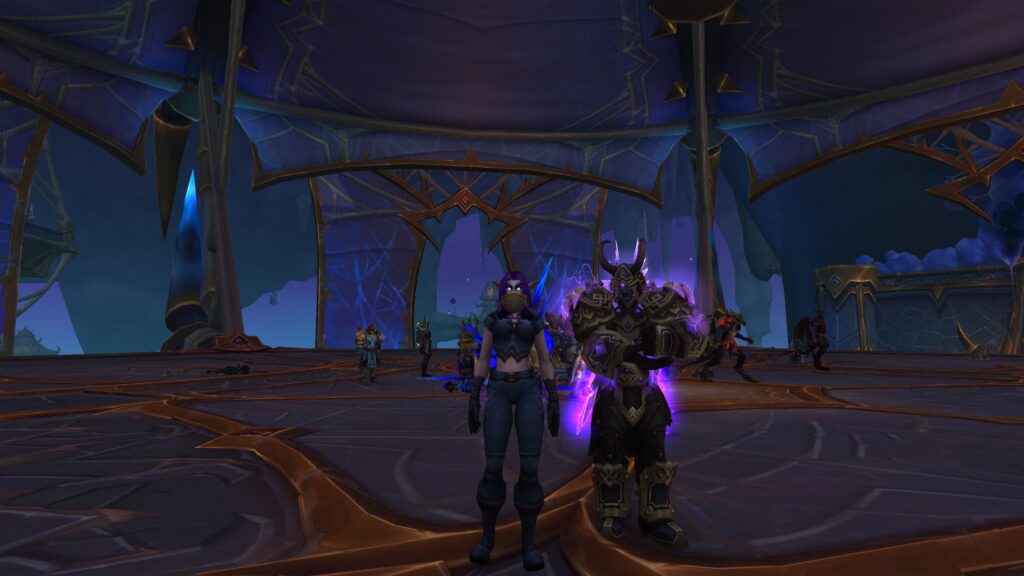
You’re stepping into the heart of raiding now, where communication and coordination take center stage.
It’s essential to establish clear roles in your raid group, leverage add-ons to enhance teamwork, and adapt strategies on the fly.
Let’s explore these points to help you master the art of leading or being part of a successful raid team.
Establishing Raid Group Roles
Despite the thrill of battle, success in World of Warcraft raiding isn’t merely a test of individual prowess but hinges considerably on the quality of communication and coordination within the raid group.
To streamline actions and decisions, you must establish raid group roles and a communication hierarchy.
- Role Assignment: This involves defining each player’s responsibilities. Tanks handle boss positioning, healers communicate mana levels and cooldowns, while DPS manage interrupts and crowd control.
- Communication Hierarchy: Establish separate channels for different roles and purposes. This range from a general raid channel to specific ones for healers or raid leadership.
- Feedback and Adaptation: Regularly analyze raid logs, identify weak links and areas for improvement, and adapt accordingly.
Utilizing Add-ons Effectively
To achieve success in the dynamic environment of WoW raids, harnessing the power of add-ons effectively is absolutely essential.
Add-on synergy and raid awareness are key components in this endeavor. Add-ons like DBM, BigWigs, and Exorsus Raid Tools enhance your ability to communicate and coordinate, providing alerts, timers, and advanced raid management.
Integration with voice chat platforms like Discord or Mumble can further streamline this process. Customizing your UI with ElvUI or Grid2 can greatly improve raid awareness, enabling better target prioritization and performance tracking.
Coordination tools such as Angry Assignments and ERT Note Taker assist in pre-pull organization and strategy sharing.
Adapting Raid Strategies
Understanding the need for clear communication channels is fundamental in adapting raid strategies in World of Warcraft. It’s all about class adaptability and strategy evolution.
You should:
- Know your role: Tanks dictate boss positioning, healers coordinate cooldowns, and DPS manage interrupts. It’s your job to understand and execute your role’s communication needs.
- Use the right tools: Utilize voice chat platforms like Discord, text macros for quick messaging, and raid markers for visual cues. These tools enhance real-time coordination.
- Learn from failures: Post-wipe analysis helps identify communication gaps. Adjust your strategies based on raid composition changes and implement feedback loops for continuous improvement.
The Benefits of Raid Testing and Practice
Raid testing and practice in World of Warcraft can reap a multitude of benefits for players.
The practice benefits are immense. You can fine-tune your strategies, fostering team coordination and enabling skill development. It’s an opportunity to familiarize yourself with encounter design and detect bugs before they become a hindrance in the live version. Your feedback is vital in this stage, helping developers fix issues and improving the overall raid experience.
Raid testing also allows for community involvement. Participating in the process and sharing strategies, you contribute to the game’s improvement.
Furthermore, it builds raid anticipation. As you practice and refine your role in testing, you’re preparing for upcoming raids, enhancing your performance, and heightening the anticipation for new challenges.
Fundamentally, raid testing and practice aren’t just beneficial, but essential for a successful and enjoyable raiding experience.
Utilizing Class-Specific Abilities in Raid Encounters
Having explored the benefits of raid testing and practice, let’s now shed light on the strategic gameplay aspect – utilizing class-specific abilities in raid encounters. The key to success is understanding class synergy, ability timing and how to leverage unique abilities for your class.
- Class-Specific Utility Abilities – These provide unique benefits to your raid team. For instance, a Mage’s Time Warp boosts raid-wide haste, while a Druid’s Stampeding Roar enhances group movement speed.
- Defensive Cooldowns and Survivability – Used strategically, these abilities can mean the difference between victory and defeat. A Death Knight’s Anti-Magic Shell absorbs magic damage, and a Warrior’s Rallying Cry bolsters allies’ max health.
- Crowd Control and Add Management – These abilities allow you to control the battlefield. A Rogue’s Sap and a Mage’s Polymorph can neutralize threats, while a Druid’s Typhoon disrupts enemy formations.
Keeping up With Weekly Updates: Class Tier Lists and Balance Changes
While you’re mastering your class abilities and raid mechanics, it’s also essential to keep pace with the ever-evolving game meta. Keeping tabs on class tier lists, updated weekly, can inform you of the current top-performing specs, critical for determining class synergy in raids, M+, and PvP.
As balance changes roll out, it’s important to adapt your gameplay strategies. These changes, often addressed through hotfixes and major patches, are based on player feedback, gameplay data, and the need to fix game-breaking bugs or exploits.
Staying informed about meta shifts requires diligence. Analyze popular talent builds, monitor group composition preferences, and adjust your strategies based on buffed or nerfed abilities.
| Resources | Description | Use |
|---|---|---|
| Patch Notes | Official updates and hotfixes | Know what’s changed |
| Wowhead, Icy Veins | Community-driven insights | Understand the implications |
| Discord, Streams | Class-specific discussions, demonstrations | See the changes in action |
| WoW subreddit | Immediate community reactions | Gauge the community sentiment |
Frequently Asked Questions
What Is the Best Way to Spend Currency Before the Expansion Launch?
To prepare for the expansion launch, it’s wise to implement currency allocation strategies.
Spend on limited-time rewards, invest in character preparation, and maximize your current season progress.
Convert volatile currency to stable, long-term items for a solid pre-expansion investment.
Stock up on speed-boosting items, sort out your spells and talents, and don’t forget to level up your alts.
A well-planned approach will set you up for success in the upcoming expansion.
How Can I Utilize My Death Knights New Hero Talents in the Raid?
You’ve got new Hero Talents for your Death Knight, and they’re perfect for raids.
Rider of Apocalypse provides AoE damage and crowd control, ideal for large groups.
San’layn increases self-healing, great for high-damage encounters.
Deathbringer enhances runic power generation, boosting your damage output.
So, coordinate with your team, adjust your rotation, and practice integrating these talents into your strategies.
It’s all about maximizing utility and survivability.
Your Death Knight’s about to become a raid superstar.
How Are the New Raid Mechanics Affected by Different Group Compositions?
In the new raid, your group’s synergy and class diversity greatly impact mechanics. A balance between melee and ranged classes can adapt to varying encounter designs.
Class utilities, like immunities and defensive cooldowns, can bypass or mitigate mechanics. Your healing composition should be diverse to cover different damage patterns.
And a good mix of DPS specializations can handle all types of encounters. So, you’ve got to strategize based on your team’s composition.
What Add-Ons Are Crucial for Managing Aggro in the War Within Raid?
Ironically, you’re not just fighting enemies in The War Within raid, but also vying for aggro.
Essential add-ons for managing this are Omen Threat Meter and KuiNameplates. Omen helps you track real-time threat levels within your party, while KuiNameplates displays threat indicators on customizable nameplates.
These tools can give you the edge, helping you adapt your class effectively and guarantee your team’s success.
Are There Specific Class Abilities That Can Counter the Venomous Rain Mechanic?
Yes, many class abilities can counter the venomous rain mechanic.
As a Hunter, use Aspect of the Turtle for immunity and Disengage to dodge explosions.
Priests can employ Dispel Magic to remove the debuff from allies.
Paladins utilize Divine Shield for immunity, while Shamans leverage Purge to remove the debuff from enemies.
It’s essential to apply these class synergy strategies to effectively manage the venomous rain counters.
Conclusion
Wrapping up, adapting to the War Within’s raid mechanics is not as intimidating as it may initially seem. By understanding class changes, mastering positioning, gearing up, communicating effectively, and practicing, you’ll level up your raid skills. Remember, keeping an eye on weekly updates for class tier lists and balance changes helps you stay adaptable. Yes, it’s a challenge, but remember, in the ever-evolving world of WoW, adaptability is your greatest ally.

Leave a Reply